

Quick Summary: Golf Bag Line Sheets
- Buyer use: A line sheet should help a retailer, distributor, pro shop, or private-label team compare products without chasing basic details by email.
- Product clarity: Show the bag type, style number when available, dimensions, divider layout, pocket count, strap configuration, material, and clear product images.
- Customization: List the fields that can be discussed, such as materials, colors, dividers, and logo placement, then confirm the final specification through sampling.
- Order control: Keep MOQ, price, inventory, sample timing, production timing, and packing details as quote-stage items tied to the actual program.
Wholesale golf bag buyers often receive a catalog before they receive a useful buying document. A polished catalog can show a product. A practical line sheet helps a buyer decide whether that product belongs in a retail assortment, a pro shop program, a resort collection, or a private-label brief.
The distinction matters as wholesale ordering becomes more digital. On October 9, 2026, The Golf Wire reported a junior golf brand using RepSpark for digital catalogs, line sheets, available inventory, and wholesale orders. For golf bag suppliers, the lesson is practical: product information has to be organized for comparison and action, not only for presentation.

Why a Line Sheet Matters to Golf Bag Buyers
A buyer may need to compare several suppliers in one afternoon. They need to know which products fit a cart-bag assortment, which ones support a lightweight carry program, and which styles can be adapted for a club, resort, or private label. A line sheet shortens that first comparison.
It also gives sales, merchandising, and sourcing teams one reference point. When the product type, style number, materials, divider layout, and customization fields are stated consistently, the team can discuss the same product with fewer avoidable revisions.
Demand is broad enough that a single bag type rarely serves every channel. The National Golf Foundation reports that 48.1 million Americans age 6 and older played golf on or off the course in 2025, and just under 4 million juniors played on a course. A line sheet should therefore make it easy to separate core retail styles from junior, club, tournament, resort, or specialty programs when those categories are part of the supplier’s range.
1. Start With the Buyer and the Channel
Each line-sheet entry should identify the most likely use case. A retailer may need a balanced assortment of stand bags, cart bags, and higher-value staff styles. A pro shop may need club-branded products and a clear path for logo approval. A distributor may need repeatable product information that can move across several accounts.
Chengsheng’s golf bag collection shows why category labels matter. Stand bags, cart bags, and staff bags serve different carry, storage, and merchandising needs. A buyer should not have to infer those differences from a product name alone.
2. Give Every Style a Clear Product Identity
Use a style number when the supplier has one. A real identifier gives the buyer a cleaner way to request a sample, compare revisions, and refer to the same product in a purchase discussion.
The line sheet should also name the product type in plain language. “OEM/ODM lightweight golf bag” is more useful than a vague label such as “new premium model.” If the product page includes a defined configuration, include it. If the configuration is still being developed, mark it as an inquiry item rather than filling the space with assumptions.
3. Put Buyer-Useful Specifications in the First View
Specifications should answer the questions a buyer will ask before requesting a quotation:
- What type of bag is it?
- How many top-cuff dividers are available on the listed style?
- What are the top-cuff width, pocket count, strap configuration, and material?
- Which dimensions or weights are verified for this exact style?
- Which details are standard, and which require confirmation?
For example, the wholesale golf bag manufacturer page lists style CS00522 with a 5-inch top cuff, 5-14 divider options, 6-10 pockets, double or single strap options, and PU leather as the listed material. It also identifies materials, colors, dividers, and logos as customizable fields. Those details are useful because they help a buyer decide what to ask next. They do not replace confirmation of the final production specification.
4. Separate Standard Features From Customization Decisions
A good line sheet makes the boundary between the base style and the custom program visible. Put standard construction details in one area. Put negotiable or project-specific fields in another.
Common discussion fields include material, color, divider layout, logo method, labels, accessories, and packing. The OEM/ODM lightweight golf bag page provides a useful example of this format: it identifies a real style number, a defined divider and pocket configuration, material information, and OEM/ODM support while still leaving the final custom brief open for confirmation.
Do not put a blanket MOQ, price, stock promise, or production schedule on every style unless it has been confirmed for the buyer’s program. Those figures can change with material, color count, decoration, packaging, quantity, and the timing of the order.
5. Use Images That Support the Buying Decision
Each line-sheet entry needs at least one clear product image. A second image can show a useful comparison, such as stand versus staff format, pocket layout, divider structure, or a close-up of an approved decoration area.
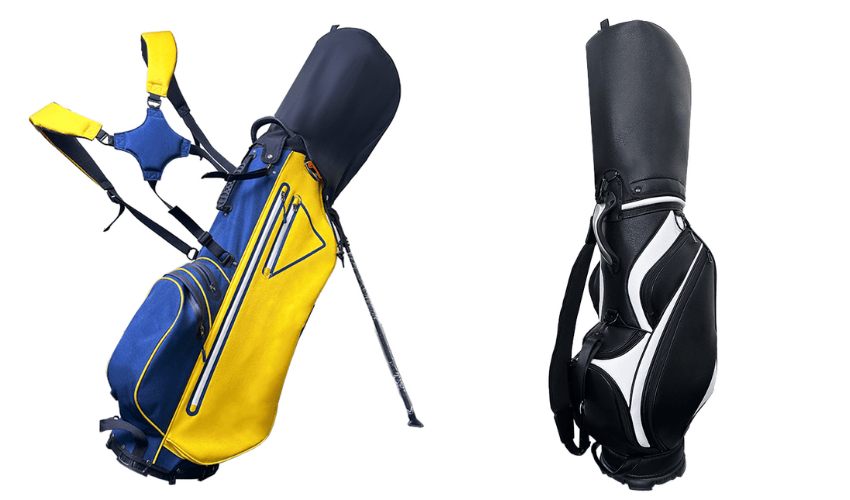
Images should match the nearby text. A complete bag image belongs with a product or assortment discussion. A strap or hardware close-up belongs with a construction discussion. Titles and filenames are not enough to identify what an image actually shows, so the alt text should describe the visible product or detail.
6. Build a Table Buyers Can Reuse
A reusable table lets a buyer copy product details into an internal assortment review or supplier brief. The table below uses verified product-page information and leaves commercial items for confirmation.
| Style or Product Type | Verified Details | Customization Fields | Useful For | Confirm Before Quoting |
|---|---|---|---|---|
| CS00522, wholesale golf bag style | 5-inch top cuff; 5-14 dividers; 6-10 pockets; double or single strap; PU leather listed | Materials, colors, dividers, logo | Retailers and distributors comparing a core wholesale style | Final configuration, MOQ, price, inventory, sample and production timing |
| CS00120, OEM/ODM lightweight golf bag style | 5 dividers; 9-inch top cuff; 6 pockets; double strap; PU leather and polyester listed | Materials, colors, dividers, logo | Private-label and branded golf bag programs | Final material mix, dimensions, decoration, packing, and commercial terms |
| Stand, cart, or staff bag category | Use the confirmed category or product page for the exact configuration | Discuss only the options supported by the selected style | Pro shops, clubs, resorts, and assortment planning | Style number, sample brief, buyer quantity, and approval route |
7. Connect the Line Sheet to Sample Approval
A line sheet starts the conversation. A controlled sample closes the gap between a product description and a production-ready order.
Before approving a custom golf bag sample, compare the actual bag with the specification for bag type, dimensions, divider layout, pocket plan, material, color references, carry system, decoration, labels, and packing. Chengsheng’s custom golf bag sample approval checklist covers those checkpoints in more detail.
For a buyer, the cleanest workflow is simple: select the style, mark the required changes, request the sample, test the physical bag, record revisions, and confirm the final commercial terms against the approved specification.
What to Send When Requesting a Quote
A useful inquiry does not need to be long. Include the target bag type, intended sales channel, preferred material or reference style, colors, logo artwork, divider and pocket requirements, packaging needs, target quantity, destination market, and the date by which the information is needed. This gives the supplier enough context to confirm the right product and the right commercial assumptions.
For suppliers, the same list becomes a practical line-sheet checklist. For buyers, it becomes a way to compare responses without losing the details that affect sample approval and retail execution.
Frequently Asked Questions
What is a golf bag line sheet?
A golf bag line sheet is a buyer-focused product document that organizes product types, style numbers, specifications, images, customization fields, and inquiry notes for wholesale or private-label purchasing.
What specifications should a wholesale golf bag line sheet include?
It should include the bag type, style number when available, top-cuff width, divider layout, pocket count, strap configuration, material, dimensions or weight when verified, product images, and the details that still require confirmation.
Should a line sheet include MOQ and pricing?
It can include confirmed program-specific MOQ and pricing. If those figures have not been confirmed for the buyer’s material, quantity, packaging, and decoration requirements, mark them for quotation instead of presenting a generic number.
How many images should each golf bag style have?
Start with one clear complete-bag image. Add a second image when it explains a meaningful difference, such as stand versus staff format, storage layout, divider structure, or a relevant construction detail.
How does a line sheet support custom golf bag sampling?
It gives the buyer and supplier a shared starting record for the style, materials, colors, dividers, logo, labels, accessories, and packing. The approved physical sample then confirms whether the final product matches that record.
Post time: Oct-10-2026