

Custom Golf Bag Sample Approval Checklist: 12 Checks Before Bulk Production
Quick Summary
- Approve the whole product: Review construction, decoration, accessories, labels, and packing together. A logo sample alone is not enough.
- Compare against the brief: Check the bag type, dimensions, divider layout, pocket plan, material, color references, and carry system against the approved specification.
- Test real use: Load clubs, open every pocket, adjust the strap, operate the stand or cart features, and photograph any issue before approval.
- Record every change: Mark the sample as approved, approved with changes, or rejected. Send one written revision list to the supplier before bulk production.
A custom golf bag sample is the buyer’s last practical opportunity to correct a product before bulk production. The sample should answer more than “Does it look good?” It should show whether the bag matches the agreed construction, whether the logo works on the actual material, and whether the product can be explained and sold through the intended channel.
This checkpoint matters for U.S. retailers, distributors, pro shops, country clubs, resorts, corporate buyers, and private-label brands. Recent coverage of a golf brand expanding through specialty retail is a useful reminder that channel growth puts more pressure on consistent product presentation. A sample approval process gives the buyer a written standard to carry from the first unit to the reorder.
Set the Approval Standard Before the Sample Arrives
Do not wait until the sample is on your desk to decide what matters. Gather the approved artwork, material references, color references, measurement sheet, feature list, and packing notes first. If the supplier has made assumptions, list them as open points instead of treating them as approved specifications.
Use a simple rating system:
- Approved: The sample matches the agreed specification.
- Approved with changes: The construction is acceptable, but written corrections are required before bulk production.
- Rejected: A major product, branding, material, or functional issue requires another sample.
Keep dated photos with the written decision. The approved sample, approved artwork, and final revision list should be easy for the buyer, supplier, and quality team to identify later.
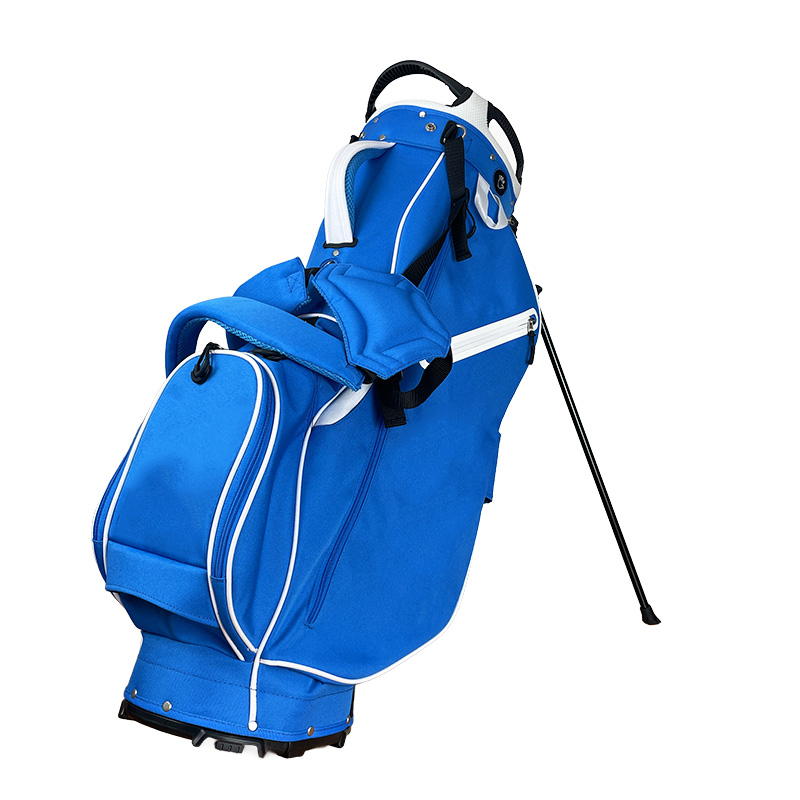
12 Checks for Custom Golf Bag Sample Approval
1. Confirm the bag type and overall silhouette
First check that the sample is the right product category. A stand bag should read as a stand bag, a cart bag should sit correctly on a cart, and a staff bag should support the intended premium or event-facing use. Compare the sample with the approved drawing or reference photos. Look at height, width, top shape, base shape, pocket balance, and the way the bag stands or rests.
2. Measure the key dimensions
Measure the dimensions that affect the selling description, carton, display, and customer use. Record the method used, including whether pockets are empty or expanded. If a dimension is outside the approved tolerance, ask the supplier to explain the cause before accepting the sample.
3. Check the top and divider layout
Count the dividers and compare their position with the brief. Insert the intended clubs or representative club shafts. Check whether the top opening, divider length, and lining allow the clubs to enter and leave without unnecessary catching. For a custom program, the divider count is part of the product identity and should match the product page, hangtag, and internal item record.
4. Open every pocket and test the access points
Open every zipper, magnetic closure, hook-and-loop panel, and accessory pocket. Check the usable opening, pocket depth, lining, pull direction, and clearance from neighboring panels. A pocket that exists on the drawing but is hard to reach on a cart or while carrying the bag may need a design change.
5. Test the carry system, stand, base, or cart interface
Adjust the shoulder strap through its full range. If the bag has a double strap, check the connection points and balance. Operate the stand mechanism repeatedly and inspect the legs, hinges, feet, and base contact. For a cart bag, check the base shape, stability, and access to the front-facing pockets when the bag is positioned for use.
6. Inspect material, color, and panel matching
Compare the sample with the approved material swatch and color reference under consistent light. Review the face, reverse, edge, and seam areas. Check whether adjacent panels have the intended texture and color relationship. Polyester, nylon, canvas, PU, and mesh may present color and surface differently, so the final judgment should come from the physical sample rather than a screen image.
7. Review stitching, binding, seams, and reinforcement
Look at seam alignment, stitch density, thread tension, binding coverage, bartacks, corner reinforcement, and areas that carry load. Inspect the handle, strap anchors, pocket corners, stand attachments, and base connection. The goal is not to demand an identical stitch pattern on every bag; it is to confirm that the sample follows the approved construction and has no visible workmanship issue that the factory needs to correct.
8. Approve the logo on the actual panel
Check logo size, position, orientation, contrast, spacing, and distance from seams or zippers. Review the decoration method on the actual panel, not only on a flat artwork proof. Printing, debossing, woven labels, and embroidery can each suit different artwork and surfaces.
Embroidery should also be judged as a group of techniques rather than a single look. Flat embroidery, raised embroidery, towel embroidery, chain stitch, and applique can create different surface effects. A three-dimensional result is one option, not the definition of embroidery. For nylon, canvas, PU, or mesh, the supplier may need to adjust the embroidery parameters to the material and panel construction. Our golf bag embroidery process guide provides additional background for this comparison.
9. Confirm trim, hardware, and zipper details
Check zipper color, puller shape, snaps, rings, buckles, piping, binding, handles, and protective covers. Confirm that the hardware matches the approved finish and that the parts operate smoothly. If a component has changed because of availability or construction, record the change instead of relying on a verbal promise.
10. Check included accessories and care information
Confirm whether the sample includes a rain hood, strap, detachable pocket, towel ring, hangtag, care card, or other agreed accessory. Check attachment points, storage location, printed language, and the way each item is packed with the bag. Do not describe an accessory as included until the buyer and supplier have confirmed it in writing.
11. Review labels, artwork ownership, and retail information
Match the brand name, product name, color name, care wording, barcode responsibility, country-of-origin or other required information to the buyer’s approved files. Brand owners should also confirm that the artwork and marks used on the sample are authorized for the intended product and channel. The USPTO trademark basics page is a useful reference when a private-label team is organizing trademark ownership and use.
12. Check packing and sample presentation
Review the protective packing, bag orientation, carton marks, hangtag attachment, and any retail-ready components included with the sample. Photograph the packed unit before approving it. A product can pass a visual inspection and still arrive with crushed pocket panels, scratched surfaces, loose hardware, or mixed color identification if packing is not reviewed at the same stage.
Sample Approval Data Table
| Product Type | Highest-Risk Checks | Evidence to Record | Approval Note |
|---|---|---|---|
| Stand / Carry Bag | Strap balance, stand action, base contact, divider layout, pocket access | Loaded-bag photos, measurements, strap and stand test notes | Confirm walking use and decoration zones before bulk approval |
| Cart Bag | Cart position, front-pocket access, base fit, top organization, handle clearance | Cart-position photos, pocket test, top and base measurements | Confirm the display and use orientation for the target channel |
| Staff / Premium Bag | Logo scale, panel finish, carry hardware, trim consistency, presentation packing | Front, side, and logo close-up photos with artwork version | Approve the visual master before adapting the brand system to other bags |

Turn Corrections Into One Written Revision List
Do not send a long chain of separate messages after the sample review. Combine the corrections into one numbered list. For each item, include the issue, the requested change, a reference photo or drawing when useful, and the person responsible for approval. State whether the change affects the artwork, material, construction, accessory, packing, or product information.
Use version names that a buyer can recognize, such as “Sample 1,” “Sample 1 revised,” and “Approved master.” Keep the approved artwork file with the approved sample record. This is especially important when a range uses several bag types and the same logo must appear across nylon, canvas, PU, or mesh panels.
For the first supplier conversation, combine this approval method with our custom golf bag RFQ checklist. Buyers comparing materials can also review the custom golf bag materials guide, while retailers planning several categories can refer to the golf bag assortment planning guide.
What to Confirm Before Bulk Production
Before releasing the order, confirm that the supplier has the same version of the approved specification, artwork, color references, accessory list, label files, packing notes, and revision list. Ask the supplier to identify any detail that still requires confirmation. MOQ, sample timing, production timing, packing dimensions, and final quotation should be confirmed for the actual specification rather than assumed from a standard model.
A private-label program also benefits from a controlled master sample. Keep one approved unit with the buyer or quality team and use the same reference for later production checks and reorders. When the product changes, repeat the approval process instead of treating the previous approval as a permanent approval for every future version.
FAQ
What is custom golf bag sample approval?
Custom golf bag sample approval is the buyer’s review of a physical pre-production bag against the approved design, materials, dimensions, features, logo artwork, accessories, labels, and packing requirements before bulk production.
What should buyers check first on a golf bag sample?
Start with the bag type, overall silhouette, key dimensions, top and divider layout, pocket access, carry or cart function, material, color, and logo placement. Then review stitching, hardware, accessories, labels, and packing.
Should buyers test a golf bag sample with clubs?
Yes. Insert representative clubs, open every pocket, adjust the strap, operate the stand when included, and position the bag on a cart when relevant. Real-use checks can reveal access, balance, clearance, or fit issues that are not visible in product photos.
Can buyers change the logo method after receiving the sample?
They can request a change, but the supplier should confirm the new method on the actual material and provide an updated proof or sample when the change affects appearance, construction, or cost. Printing, debossing, labels, and embroidery should be selected based on the artwork and panel.
What documents should be approved before bulk production?
Approve the final specification, artwork, color references, measurement sheet, accessory list, labels, packing instructions, quotation, and written revision list. Keep them linked to the approved master sample.
Post time: Sep-11-2026