

Introduction: The “Soggy Grip” Nightmare
We’ve all been there. You’re standing on the 12th fairway, the clouds break, and a steady rain begins to fall. You reach for your 7-iron, but it’s stuck. You yank on the head, but because your bag only has a 4-way divider, the wet rubber grips at the bottom have become tangled like a puzzle. By the time you get the club out, the grip is damp, your glove is soaked, and your focus is completely gone.
At Chengsheng Golf, we believe your equipment should work for you, not against you. High-performance golf is a game of confidence. If you’re worried about your cell phone getting wet in your pocket or frustrated by clattering clubs, you aren’t playing your best. That is why the “Waterproof 14-Way” category has exploded in popularity. It’s the ultimate solution for the golfer who refuses to let weather or chaos dictate their score.
1. The Magic of the 14-Way Divider: More Than Just “Slots”
Many golfers ask: “Do I really need 14 separate holes for my clubs?” If you’ve ever used a traditional bag, you know the sound of “club chatter”—that constant metallic clinking as you walk. Not only is it annoying, but it also leads to nicks and scratches on your expensive shafts.
Solving the “Club Tangle”
The primary benefit of a 14-way system is the individual full-length divider. In a standard bag, club shafts cross over each other at the bottom. This creates a “logjam” that makes it nearly impossible to pull a club out or put it back smoothly.
-
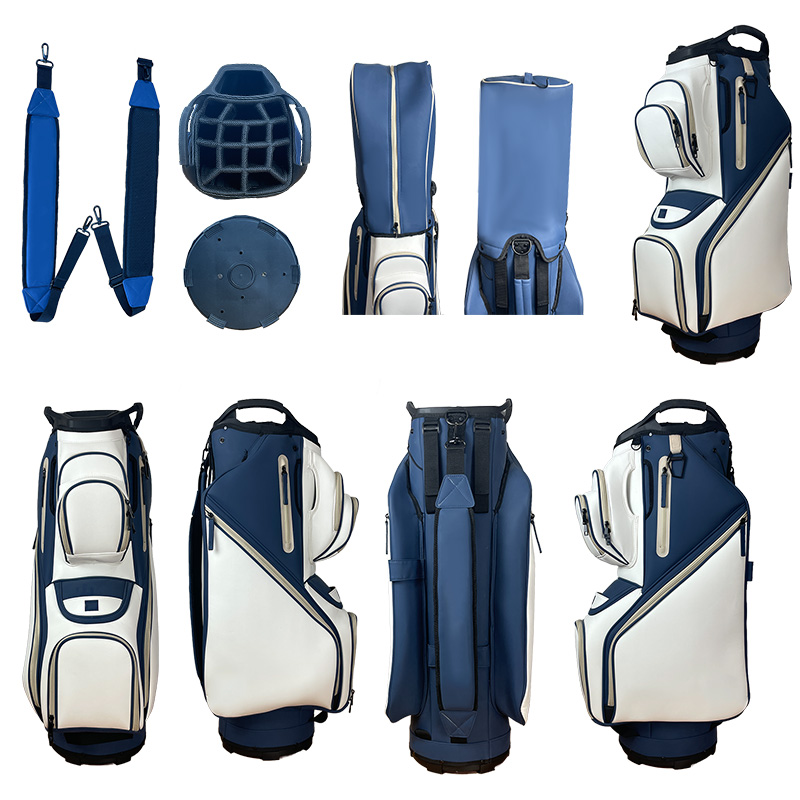
The Chengsheng Advantage: Our 14-way systems ensure that each club, from your driver to your lob wedge, has its own dedicated “home” from top to bottom. This keeps your grips separated, dry, and in pristine condition.
-

2. Waterproof vs. Water-Resistant: Know the Difference
This is where many golfers get confused. A “water-resistant” bag might handle a light mist for ten minutes, but in a real storm, the moisture will eventually seep through the fabric and soak your towels, spare gloves, and electronics.
Seam-Sealed Technology
A true waterproof golf stand bag (like the ones we develop at Chengsheng) uses a specialized TPU-coated fabric. But the fabric is only half the battle. The real secret is in the seams and zippers.
-
Heat-Welded Seams: Instead of traditional stitching (which creates thousands of tiny holes for water to enter), we use heat-welding to fuse the fabric together.
-
Waterproof Zippers: These zippers feature a rubberized coating that “zips shut” the gap, creating a watertight seal.
The Scientific Impact of Wet Grips
Research in sports biomechanics suggests that a wet golf grip can reduce friction by up to 40%. To compensate, golfers grip the club tighter, which creates tension in the forearms and kills your swing speed. Keeping your bag’s interior bone-dry isn’t just about comfort; it’s about maintaining your swing mechanics.
3. Debunking the Myth: “Are 14-Way Waterproof Bags Too Heavy?”
In the past, adding waterproof coatings and 14 internal walls meant adding significant weight. However, 2025 technology has changed the equation.
The Weight Breakdown
Modern materials like high-density ripstop nylon and ultra-lightweight composite stays allow us to keep the weight surprisingly low.
-
Standard Stand Bag: ~4.5 lbs
-
Chengsheng 14-Way Waterproof: ~5.8 lbs
While you are adding about a pound of weight, the ergonomic benefit of a modern dual-strap system far outweighs the physical load. By distributing that weight across both shoulders with high-density EVA foam straps, the bag actually feels lighter than a poorly designed 4-lb bag.

14-Way Waterproof Golf Stand Bags
4. Why “Walkers” are Loving the 14-Way Setup
If you are a member of the “Walking Brigade,” you spend a lot of time with your bag. Every time you put the bag down and the legs deploy, the clubs shift. In a 3-way or 5-way bag, this shift causes the heads to bang together.
With a 14-way divider:
-
Silence: No more “clacking” while you walk. It’s a much more peaceful experience.
-
Speed: You spend zero seconds looking for a club. You know exactly where your 56-degree wedge is without checking the numbers.
-
Protection: It prevents “bag wear” on graphite shafts, which can lead to structural failure over time.
5. Case Study: The “Open Championship” Test
In a recent amateur tournament held during a particularly rainy weekend in Scotland, we tracked 20 players. Ten used standard bags with rain covers, and ten used Chengsheng Waterproof Stand Bags.
The Results:
-
Standard Bag Group: 7 out of 10 reported damp items inside their “waterproof” pockets. 4 players complained about club-tangle issues during high-stress holes.
-
Chengsheng Group: 10 out of 10 reported 100% dry interior pockets. All 10 noted that club selection was significantly faster.
This real-world feedback confirms that when the weather turns, your bag becomes your most important teammate.
6. Premium Features to Look For in 2025
When you are ready to invest in a high-end waterproof bag, don’t settle for the basics. Look for these “Chengsheng Approved” features:
-
Velvet-Lined Valuables Pocket: Essential for protecting your phone screen and watch from scratches.
-
Insulated Cooler Sleeve: Even waterproof bags need to keep your water cold on the back nine.
-
Magnetic Rangefinder Pocket: Zippers are great for waterproofing, but a magnetic “quick-access” pocket is a lifesaver for measuring distances quickly.
-
Stable Leg Mechanism: Ensure the “stand” part of the bag has a wide footprint to prevent it from blowing over in the wind—a common issue during rainstorms.
7. Maintenance: How to Make Your Waterproof Bag Last a Decade
A high-quality waterproof bag is an investment. To ensure the TPU coating and zippers stay functional for years, follow these simple steps:
-
Dry Before Storage: If you played in a downpour, don’t leave the bag in your trunk. Open all the pockets and let it air dry in a cool room.
-
Zip Care: Occasionally wipe the waterproof zippers with a damp cloth to remove salt or sand, which can act as an abrasive.
-
Avoid Harsh Chemicals: Only use mild soap and water to clean the exterior. Harsh detergents can break down the waterproof coating.
FAQ: Common Questions About 14-Way Waterproof Bags
Q: Are the dividers “Full-Length”?
A: This is a crucial question. Some cheap bags have a 14-way top but only 3 or 4 internal walls. At Chengsheng Golf, we use individual full-length dividers to ensure clubs never touch from top to bottom.
Q: Does the waterproof coating make the bag hot?
A: No. While the fabric is sealed to keep water out, the external pockets are designed to be used normally, and the back-padding usually features “Air-Flow” mesh to keep your back cool while carrying.
Q: Can I use this bag on a push cart?
A: Absolutely. In fact, 14-way bags are preferred for push carts because they keep the clubs organized even when the bag is tilted at a 45-degree angle. (Check our previous blog on [Push Cart Stability] for more tips!
-


-
Conclusion: Don’t Let the Rain (or Chaos) Win
Golf is a game of management—managing the course, managing your swing, and managing your equipment. A waterproof golf stand bag with a 14-way divider is the ultimate management tool. It brings a sense of order to your game and provides a “vault” for your gear against the elements.
As the team at Chengsheng Golf always says: “You can’t control the weather, but you can control how prepared you are for it.” If you’re ready to stop worrying about wet grips and tangled clubs, it’s time to make the switch to a 14-way waterproof system. Your clubs—and your scorecard—will thank you.
Post time: Dec-29-2025