

Quick Summary
-
- Custom golf cart bags are a strong B2B category for pro shops, country clubs, golf resorts, distributors, and private-label brands because they combine premium presentation, practical storage, and high logo visibility.
- For US buyers, the most important sourcing checks are divider layout, pocket configuration, material durability, logo application, packing size, sample approval, and production consistency.
- Recent US golf participation and rounds-played indicators support steady demand for well-built golf bags, especially products that fit green-grass retail and club merchandising programs.
- An OEM/ODM factory partner can help buyers turn one core cart bag platform into multiple private-label SKUs through color, material, divider, logo, and packaging variations.
For pro shops and country clubs, a golf cart bag is not only a storage item. It is a retail product, a member-facing brand asset, and often a practical part of the course experience. When a buyer is planning a private-label golf bag line, a tournament merchandise program, or a resort-branded retail collection, cart bags deserve a separate sourcing plan from stand bags, staff bags, Sunday bags, and headcovers.
The category is also well aligned with the current US golf market. The National Golf Foundation golf industry facts show broad engagement across on-course and off-course golf, while NGF’s monthly rounds played reports remain a useful indicator for course operators and golf businesses planning inventory. For B2B buyers, this does not mean buying more of every product. It means choosing product categories that can support repeat rounds, premium merchandising, and visible brand identity.
Why Cart Bags Need Their Own Procurement Plan
A cart bag is usually purchased by a different customer mindset than a lightweight walking bag. Cart bag buyers often prioritize club organization, pocket access, structured shape, premium materials, and a clean look on a riding cart. This makes the category especially relevant for country clubs, golf resorts, corporate golf programs, and pro shops that want a higher-ticket product with strong visual branding.
Compared with a stand bag, a cart bag can support more divider options and more storage zones. Compared with a staff bag, it is usually easier to merchandise to a broader buyer base because it balances premium presentation with everyday usability. A private-label program can also use the same design language across custom golf cart bags, matching headcovers, towels, and other accessories.
Trade events reinforce this product-development mindset. The PGA Show positions itself as a global golf industry event where equipment, accessories, apparel, and technology brands meet buyers and industry professionals. Its 2026 New Product Zone update also shows how much attention buyers give to market-ready product innovation. For golf bag buyers, that makes differentiated materials, branding, storage layout, and retail presentation more important than simply choosing a generic model.
What US B2B Buyers Should Specify First
Before requesting a quotation, define the commercial role of the bag. A distributor may need a repeatable wholesale SKU with stable specifications. A country club may need a limited branded program for members. A resort may need a premium display product with strong logo visibility. A private-label golf brand may need a scalable platform that can be developed into several colorways.
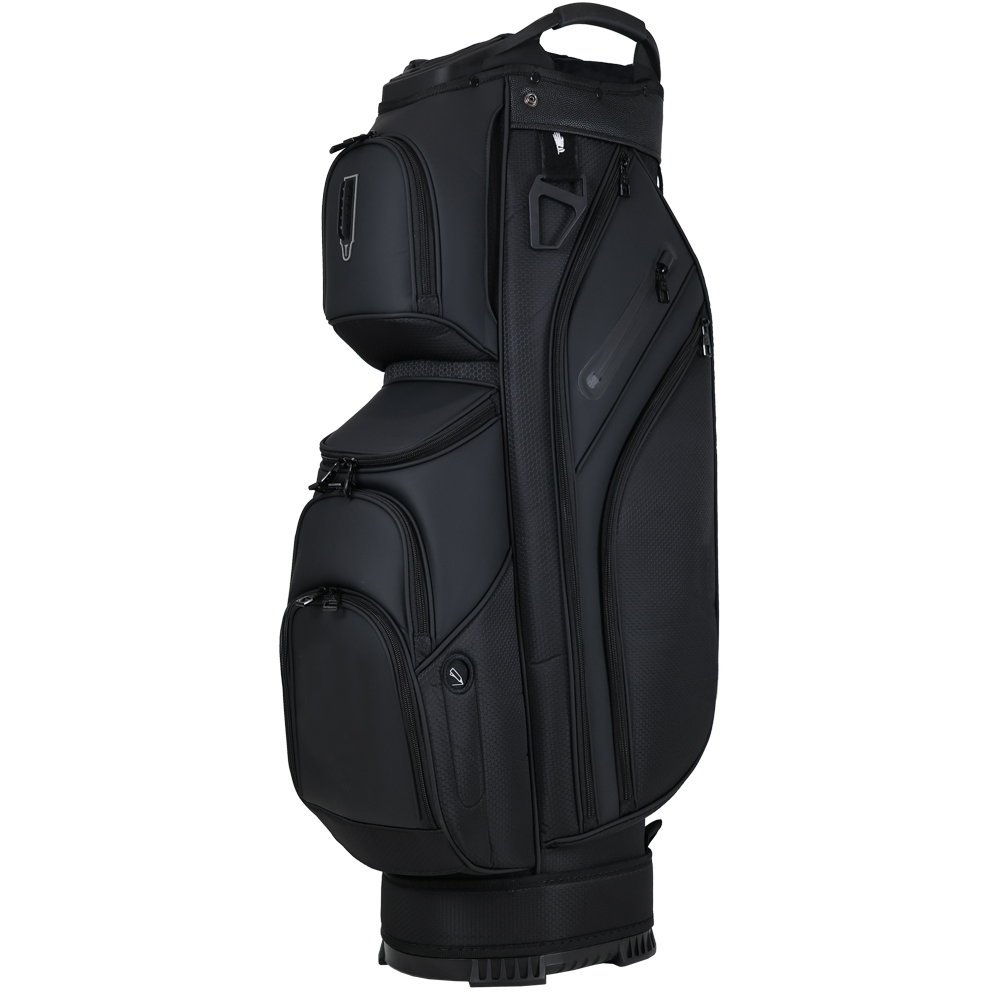
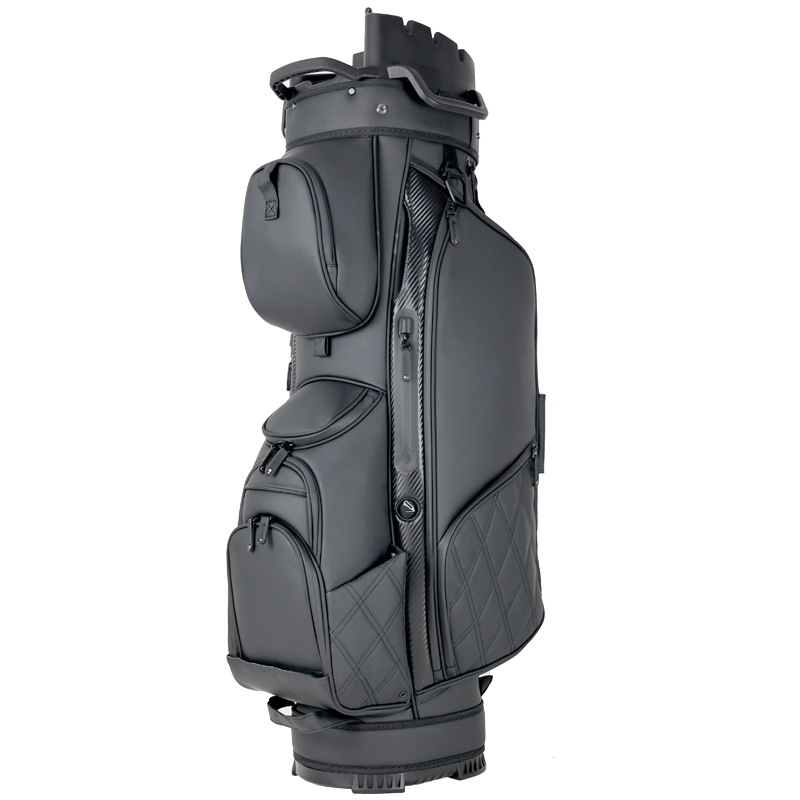
The first specification should be the divider structure. A 14-way or 15-way top works well for buyers who want club organization and a premium retail story. A lower divider count can be appropriate for lighter carry-oriented designs, but for cart bags, full organization is often a stronger sales point. Chengsheng Golf’s Customizable Black Leather Cart Bag for Golf 15 Ways is a useful reference because it combines a 15-way top, 6-10 pockets, leather material, OEM/ODM support, and logo/material/color customization.
The second specification is pocket planning. Pro shop customers usually compare pocket access, valuables storage, apparel storage, bottle pockets, ball pockets, and rangefinder or accessory storage. B2B buyers should ask for a pocket map during sampling so the factory and buyer agree on exact location, opening direction, zipper type, and logo placement.
The third specification is branding. Embroidery, woven labels, patches, heat transfer, zipper pull customization, color blocking, and private-label packaging can all change the perceived value of a cart bag. Buyers planning a broader branding system can also review the existing guide to golf bag embroidery and corporate event customization before finalizing artwork.
SKU and Product Planning Table
| SKU / Product Type | Bag Type | Best For | Material | Capacity / Divider | Customization Options | MOQ / Inquiry Note | Recommended Buyer |
|---|---|---|---|---|---|---|---|
| Cart Bag for Golf – CL47 | Cart bag | Premium pro shop and country club retail programs | Leather | 15-way top, 6-10 pockets | Materials, colors, dividers, logo, and related OEM/ODM changes | Confirm MOQ, sample timing, packaging, and production lead time by inquiry | Pro shops, country clubs, golf resorts, distributors |
| Mens Cart Golf Bags – HY-26-004 | Cart bag | Private-label cart bag colorway programs | Leather | 15-way top, 6-10 pockets | Logo, materials, colors, dividers, and retail presentation | Confirm MOQ and colorway plan before quotation | Private-label golf brands, retailers, distributors |
| Best Golf Bag Cart – CL51 | Cart bag | Structured retail assortment with 14-way organization | Leather | 14-way top, 6-10 pockets | Logo placement, divider configuration, colors, and material updates | Confirm packing dimensions and carton plan for wholesale shipping | Golf retailers, resort shops, course operators |
| Golf Carry Stand Bag – CL49 | Carry / stand companion SKU | Buyers building a broader golf bag collection around cart bags | Leather | 3-way top, 6-10 pockets | Materials, colors, dividers, logo, and coordinated private-label design | Use as a companion category when building a seasonal bag line | Retailers, distributors, private-label brands |
How to Build a Private-Label Cart Bag Line
A practical private-label cart bag line usually starts with one proven base construction, then expands through controlled variation. Instead of developing every SKU from zero, buyers can choose a core model from the broader golf bags collection and change the commercial features that matter most to their customers.
For example, a country club might use a black leather cart bag with a refined club logo, tonal stitching, and premium packaging. A distributor might need two or three colorways with consistent divider, pocket, and packing specifications. A corporate buyer may prioritize logo clarity and event presentation over a deep SKU range. In each case, the sourcing brief should define the buyer type, retail price target, expected order quantity, artwork file requirements, and must-have construction details.
OEM/ODM support is valuable because small specification choices affect production outcomes. A change in material thickness can affect stitching, embroidery clarity, and bag structure. A divider change can affect top cuff construction and perceived quality. A pocket layout change can affect sewing workflow and inspection points. A factory that handles both trade and manufacturing can help buyers balance design ambition with repeatable production.
Sampling and Quality Control Priorities
For a custom golf cart bag program, the sample should not be reviewed only for appearance. Buyers should test the top cuff, divider alignment, zipper movement, pocket access, handle comfort, strap attachment, base stability, logo accuracy, and packing condition. If the bag will be sold through pro shops or club retail, visual consistency across units is especially important because the products may be displayed side by side.
Ask the supplier to confirm which details are fixed and which are customizable. Some buyers assume that every divider, logo area, pocket, trim, and packing detail can be changed without affecting cost or lead time. In practice, a clear quotation depends on the approved specification sheet, artwork files, material choice, and order plan. If you need matching premium event or resort merchandise, the recent guide to custom staff golf bags for private-label and pro shop programs can help align the cart bag with a broader premium bag strategy.
Cart Bag Assortment Strategy for Pro Shops
Pro shops should avoid treating cart bags as one generic shelf item. A stronger retail plan often includes one premium private-label cart bag, one lighter or lower-divider option, and one companion bag or accessory category. This gives buyers a clear good-better-best structure without overloading inventory.
Country clubs and resorts can also use cart bags as member gifts, tournament merchandise, or branded retail products. In those cases, the procurement team should confirm logo approval dates, sample lead time, packing requirements, and delivery windows early. Cart bags are bulkier than smaller accessories, so packing dimensions and freight planning matter for margins and delivery timing.
For distributors, the best program is usually a repeatable SKU system. Choose a core cart bag, lock the technical specification, then use color and branding variations for different retail accounts. This keeps quality control manageable while giving each customer a differentiated product story.
Factory Questions to Ask Before Ordering
- Which cart bag models are already available for OEM/ODM customization?
- Which materials are recommended for the target retail price and durability requirement?
- Can the top cuff divider count, pocket layout, logo placement, and color blocking be adjusted?
- What sample process is used before mass production?
- How should artwork files be prepared for embroidery, patch, or label applications?
- What packing dimensions and carton plan should be used for wholesale shipping?
- Which inspection points are checked before shipment?
These questions help buyers compare factories on execution, not only on unit price. For US B2B buyers, the best supplier is not simply the one with a catalog. It is the one that can turn a product brief into a stable, repeatable, brand-ready cart bag program.
FAQ
What are custom golf cart bags best used for in B2B programs?
Custom golf cart bags are best used for pro shop retail, country club merchandise, golf resort branding, private-label golf bag lines, distributor programs, and corporate golf events where premium presentation and logo visibility matter.
What specifications should buyers compare before sourcing wholesale golf cart bags?
Buyers should compare divider count, top cuff structure, pocket layout, material, zipper quality, logo method, packing dimensions, sample approval process, MOQ, and production lead time before sourcing wholesale golf cart bags.
Can a factory customize cart bag dividers, materials, colors, and logos?
Yes. An OEM/ODM golf bag factory can usually customize materials, colors, divider layout, logo application, trims, and packaging, but buyers should confirm feasibility, cost, MOQ, and lead time during the quotation and sampling stage.
Are 14-way and 15-way cart bags better for pro shop retail?
14-way and 15-way cart bags are often strong choices for pro shop retail because they give golfers clear club organization, premium product presentation, and a higher perceived value than simpler divider layouts.
How should private-label brands plan a golf cart bag SKU range?
Private-label brands should start with one proven cart bag construction, then create controlled variations through colorways, logo placement, material choices, and packaging so the line is differentiated without making production overly complex.
Post time: Jul-17-2026